

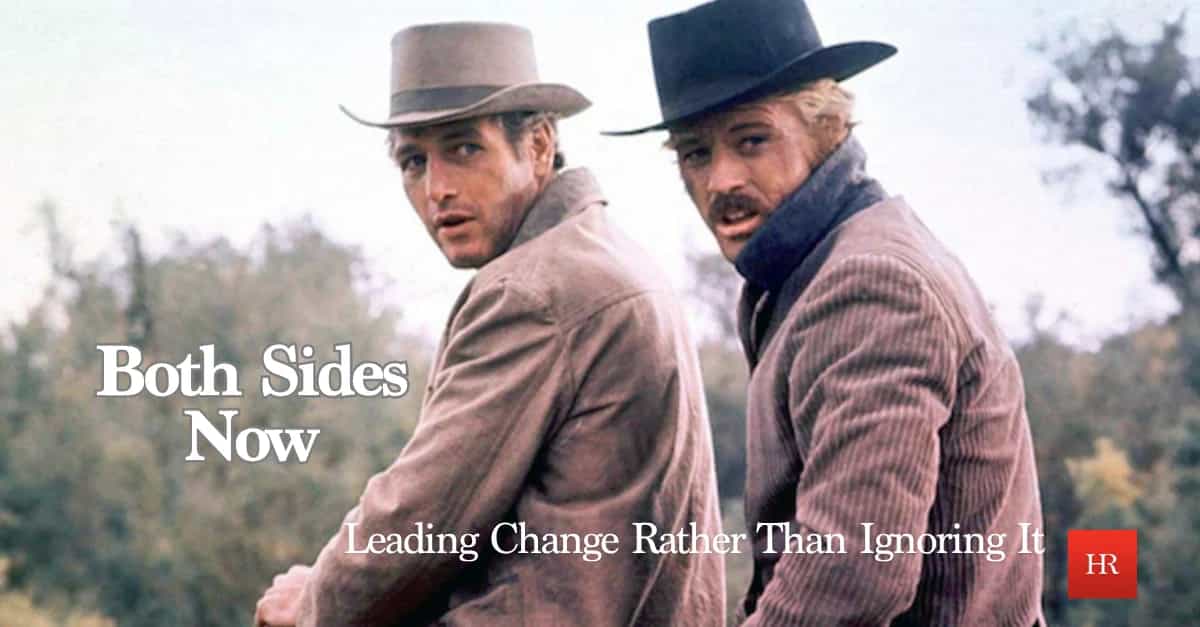

After watching the Martin Short documentary, where he and Tom Hanks recreated the famous ending from Butch Cassidy and the Sundance Kid (it’s awesome!), I found myself remembering the original film. Lots of humor, exceptional chemistry between the Newman and Redford, and of course, that famous ending, all worked to make this movie a classic.
And it’s also a deep lesson in change and time. More specifically, what happens when the skills and strategies that made you successful stop working.
Throughout the movie, Butch Cassidy is a smart leader. He's innovative, charismatic, and always looking for a new angle (a man after my own heart!). The gang has been successful for years. They know how to rob trains, evade law enforcement, and stay one step ahead of everyone chasing them. Until they aren't.
The railroad companies change the game. There are more resources made available with a large portion going towards security. A relentless posse is assembled. The old playbook no longer works.
The challenge isn't that Butch and Sundance suddenly become less talented. The challenge is that the environment around them changes faster than they do. Things has worked well for so long that the push to evolve was not a primary concern.
Organizations today are facing their own version of that relentless posse. It’s not just one thing; it’s all the things - artificial intelligence, inflation, automation, economic uncertainty, skills shortages, shifting employee expectations, new competitors entering markets from unexpected directions, capitalization shortages, and more.
Many organizations are still operating with playbooks that were incredibly effective five or ten years ago. As Butch Cassidy said, “"I have vision. And the rest of the world wears bifocals." Past success, however, can create a dangerous sense of confidence.
- "We've always done it this way."
- "Our customers don't want that."
- "This trend won't affect us."
You can just imagine those statements being spoken in boardrooms. Maybe you have heard one of them this week! One of the hardest realities for leaders to accept is that success often teaches us the wrong lessons. When something works, we naturally want to repeat it. We double down on proven processes, established practices, and familiar approaches. To be fair, there are times when this is right, but disruption doesn't care about our history.
The organizations thriving today aren't necessarily the ones with the best historical track record. They're the ones willing to challenge their own assumptions before the market forces them to. And HR stands in a wonderful spot to partner in this.
For years, HR has often been asked to manage change after leadership decisions have already been made. Today, HR should be helping organizations anticipate change before it arrives. How does HR do this? Just ask some questions:
- Do our employees have the skills we'll need three years from now?
- Are we rewarding adaptability as much as experience?
- Are our leaders encouraging experimentation, or unintentionally protecting the status quo?
- Are we preparing people for what's next, or training them for what already exists?
The answers to those questions often reveal whether an organization is building resilience or simply preserving comfort. The truth is that most disruption doesn't happen overnight. Warning signs usually appear long before the crisis arrives. New technologies emerge. Customer expectations shift. Competitors begin experimenting. Employees start asking different questions.
The organizations that succeed are typically the ones paying attention early enough to respond. Butch Cassidy-itis.
The problem wasn't that Butch lacked intelligence, creativity, or courage. The problem was that the world changed around him, and eventually, the old methods couldn't keep up.
As leaders, we should regularly ask ourselves a simple question: If we were building our organization from scratch today, would we design it the same way?
If the answer is no, the work of change should probably begin now. And change does not usually mean that everything to date has been wrong. You might be nodding yes to this, but think about how often, deep down, people think change is happening because they did something wrong. That lie is actually part of the posse chasing us today, too. Let’s rid ourselves of those “chasing us” and evolve before they could even think of arriving.

Comments
No comments yet. Start the conversation.